
Good morning! Maybe it’s afternoon, but anytime of day is the perfect time of day to eat breakfast foods. Let me ask you a serious question—do you reserve oatmeal for chilly days? When it comes to favorite breakfast cereals, boxed flakes and rolled oats are clearly the most popular, but which bowl is the breakfast champion?
Let’s take a quick look at nutritional value, variety, and convenience to see if oats or cereal wins the morning crown…
Nutritional Value
When it comes to oatmeal and cereals let’s get one thing straight right off the bat—after all both pre-packaged oatmeal and boxed cereals come in thousands of different kinds, each with their own unique nutritional value.
Let’s cut to the chase, most of us already know that high-sugar cereals—your fruity loops, honey covered o’s, and cocoa-covered puffs (you know the ones, marketed at kids) are full of sugar. So here, I’m talking about cereals that are big on vitamins and minerals—not those jam-packed with chocolate, marshmallows, and food dyes.
Whole Grain Cereals
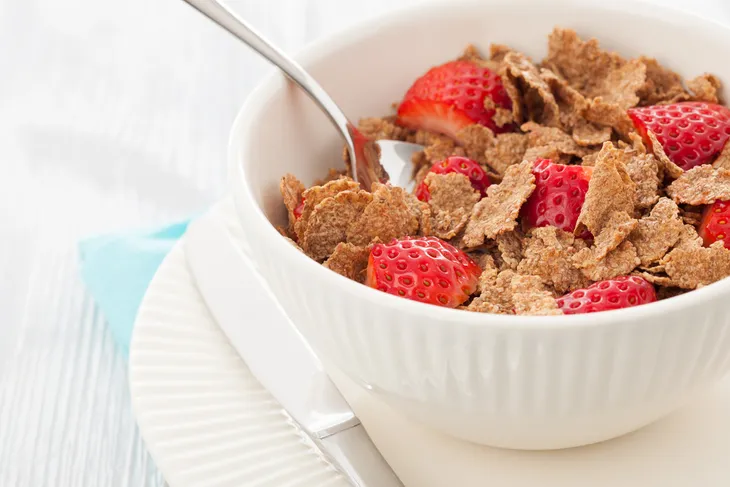
If you didn’t know, whole grains refer to foods that retain all the essential parts (or nutrients) of the grain. That means they don’t strip out, but preserve the wheat germ, endosperm, and bran. Refined grains, on the other hand, strip out these essential nutrients (i.e., the good stuff).
So when it comes to reaching for a bran-based cereal you can do so knowing you’re going to get lots of vitamins and minerals—such as vitamin A, iron, fiber, and a slough of vitamin B’s.

Plain Oatmeal
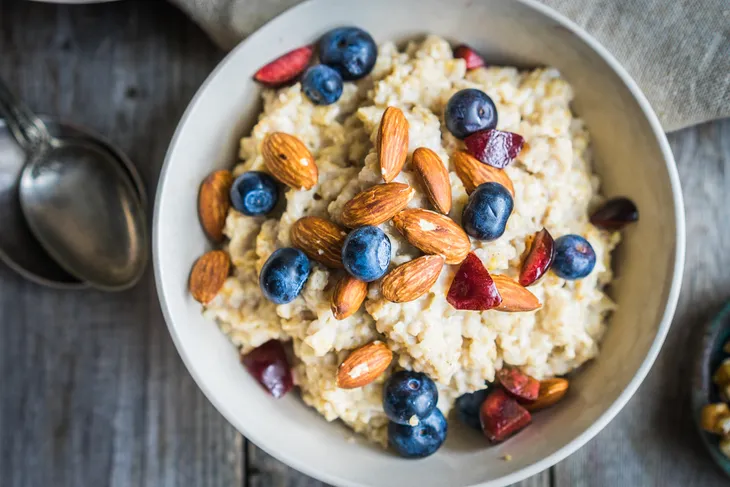
Plain oatmeal is just that—its pretty low on flavor (by itself) as well as offering less vitamin A, iron, and vitamin B compared to a whole grain cereal. Of course, you can add flavor with other ingredients—fresh or dried fruits, nuts, yogurt, low fat milk, cinnamon, or a touch of maple syrup, raw honey, or apple butter.
However, where oatmeal gets points is over the fact that it contains less cholesterol, fat, and refined sugar compared to most boxed cereals. Most people choose oats because they tend to fill the belly up more and for longer, and there’s definitely something to be said for long-term satiation on a cold winter’s morning.
The Convenience Factor
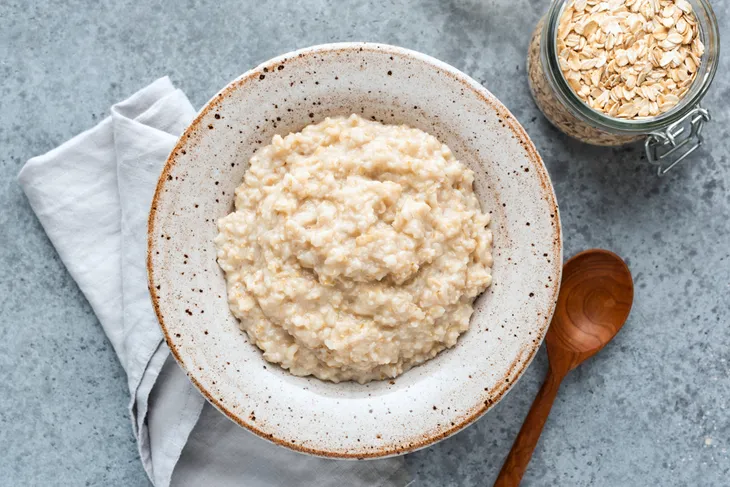
Let’s be real for a second and talk about convenience as far as ready cereals vs. rolled oats (even quick oats can take 10- to 15-minutes to simmer). There’s a good chance that most of you might reach for cereal in the morning due to the convenience factor. Hands down, bowl (check), flakes (check), milk (check) and you’re good to go!
However, you can prepare a ready-to-go oatmeal bowl by preparing it the evening before. Simply put ¼-cup of quick oats, a sprinkle of chia or flaxseeds, almond slivers or walnuts, raisins or dried cranberries into a mason jar. Fill with a bit of 2-tablespoons of greek yogurt and 1/2-cup of fat free milk and allow it to soak overnight. Voila, everything you need for a quick morning meal!

Keeping Breakfast Interesting
Even though what you like to eat for breakfast differs from your spouse or your neighbor, chances are you’re not the kind of person who enjoys noshing on the same breakfast every day. This is why many opt for boxed cereal where variety is the spice of life. You can find many nutritious cereals in the natural food section of your grocery store. Just look for boxes with low amounts of added sugars, preservatives, and colors. And always opt for boxes with ingredients that you can pronounce.
Sure, oats may seem pretty boring if you’re sprinkling them with the same spices and nuts day in and day out. To avoid oat overload, stock your pantry with a variety of nuts, seeds, dry and fresh fruits, nut butters, and natural sweeteners so you can customize your breakfasts quickly each morning.